
Memoirs for AAPI Month
As the end of May wraps up Asian American and Pacific Islander (AAPI) Heritage Month, here are some memoirs written by AAPI authors to check out!
Crying in H-Mart by Michelle Zauner
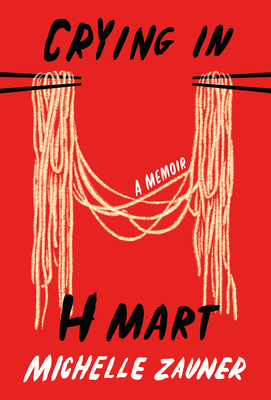
Crying in H-Mart details the life of musical artist Japanese Breakfast’s Michelle Zauner as she traverses from growing up as the only Asian-American at her school in Oregon to bonding with her mother over food in her grandmother’s apartment in Seoul to reconnecting with her cultural heritage in the wake of a terminal diagnosis and her mother’s passing. This book is a devastating portrait of grief, but Zauner still infuses her writing with such humor and heart while depicting her struggle with her Korean identity, growing up mixed race, and her relationship with her mother. (Be sure to have tissues on hand for this one. You’ll need them… Trust me.)
Family Style: Memoirs of an American from Vietnam by Thien Pham
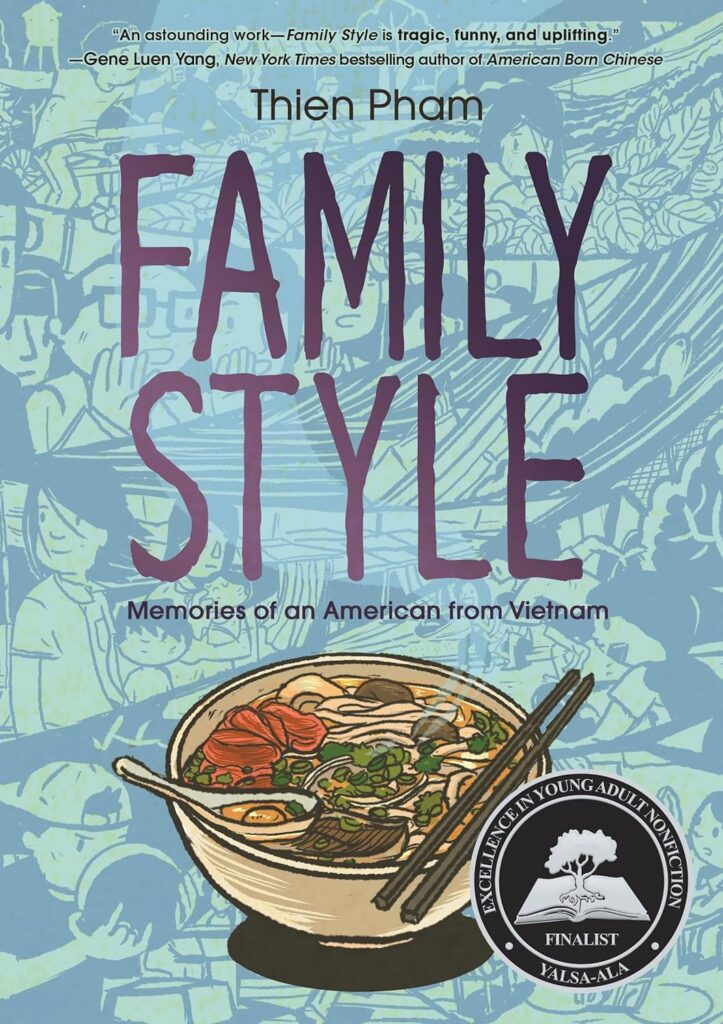
Family Style is a young adult graphic novel that follows the harrowing but true story of a family’s escape from Vietnam at the end of the Vietnam War and their eventual journey to California as refugees. As someone who has read and enjoyed many graphic novel memoirs like The Best We Could Do or When Stars are Scattered, this is a new favorite that I will be thinking about for a while. With beautifully evocative artwork by the author, this book illustrates the power and the cost of the American Dream for immigrant families—the ways that assimilation is often paid for by the loss of one’s cultural identity and heritage.
Beautiful Country by Quin Julie Wang
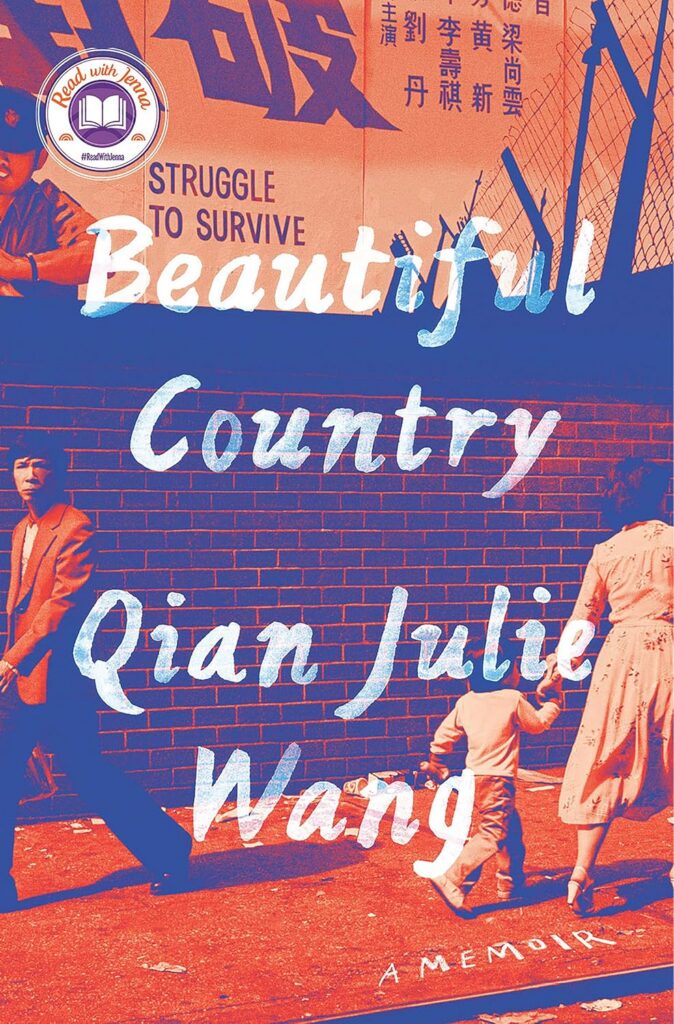
Quin Julie Wang shares the daunting account of her childhood growing up as an undocumented immigrant in the memoir Beautiful Country, showing firsthand the trials and tribulations immigrant families frequently encounter. This book also exists in conversation with the complexities of the American Dream. In China, Wang heard tales from family and friends of two Americas: one where everyone is rich, and one where everyone is poor. That duality is accurately captured here and highlights the reason many immigrants continue to make tremendous sacrifices to move to the United States with the hope for a better life—for themselves and their children. Beautiful County is unflinching in its depiction of Wang’s adolescence as an undocumented immigrant, but still offers a glimmer of hope.
Sara D. is a Library Assistant at Graham Public Library.